PALMA · NEIGHBOURHOOD
La Llotja in Palma: exchange, Consolat de Mar and Passeig de Sagrera
IN SHORT
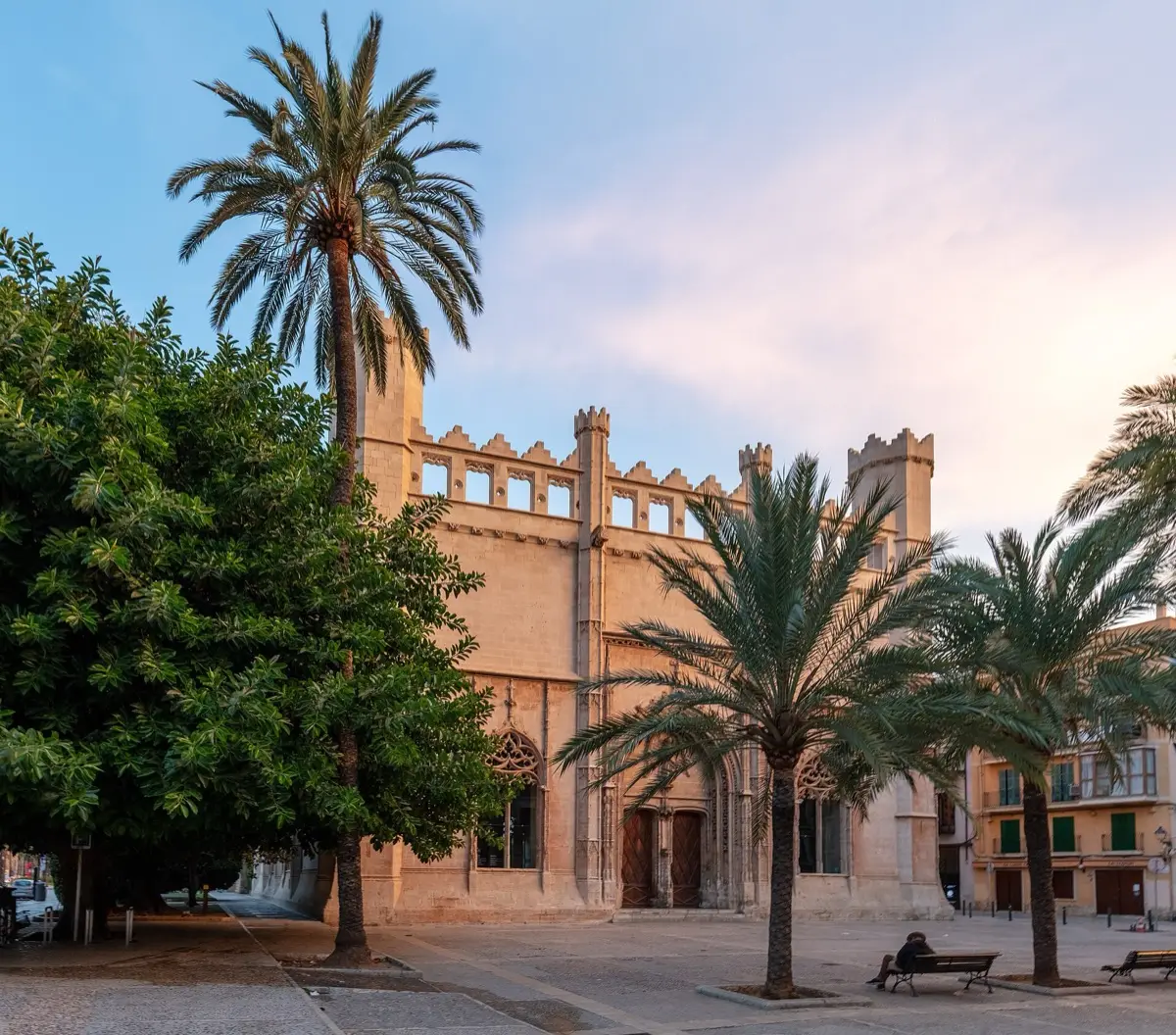
La Llotja is the neighbourhood between Palma’s old town and the sea, named after the Gothic exchange, Sa Llotja. Guillem Sagrera began building it in 1421 for the city’s merchants, and today the inside is only open during exhibitions. From May to September there is a craft market on Passeig de Sagrera on Thursday to Sunday evenings.
AI-assisted translation of the German original (16 October 2026). Read the German original
At a glance
- Location
- Palma, the old Ribera de Mar between the old town and the sea, on Passeig de SagreraSource ↗
- Sa Llotja
- Plaça de la Llotja 5, the merchants’ Gothic exchange, inside only open during exhibitionsSource ↗
- Evening market
- Crafts on Passeig de Sagrera: May to September, Thu to Sun 19:00 to 0:30Source ↗
- Es Baluard
- Museum of modern and contemporary art: Tue to Sat 10:00 to 20:00, Sun 10:00 to 15:00, closed on MondaysSource ↗
- Bus (EMT)
- Stop pl. de la Reina, Catedral: lines 25, 35 and CC; Parc de la Mar, Catedral: lines 25 and 30Source ↗
- From the airport
- Line A1 to passeig Mallorca, Jaume III, about 25 min according to the timetable, from there about 550 m as the crow flies to the LlotjaSource ↗
- Best time
- Evenings from May to September, when the market is on Passeig de SagreraSource ↗
- Who it suits
- You, if you enjoy history, architecture and evenings by the water
SOFIA’S TIPS
What I’d tell you.
Before you go, check whether there’s an exhibition on at the Llotja. That’s the only time it’s open inside.
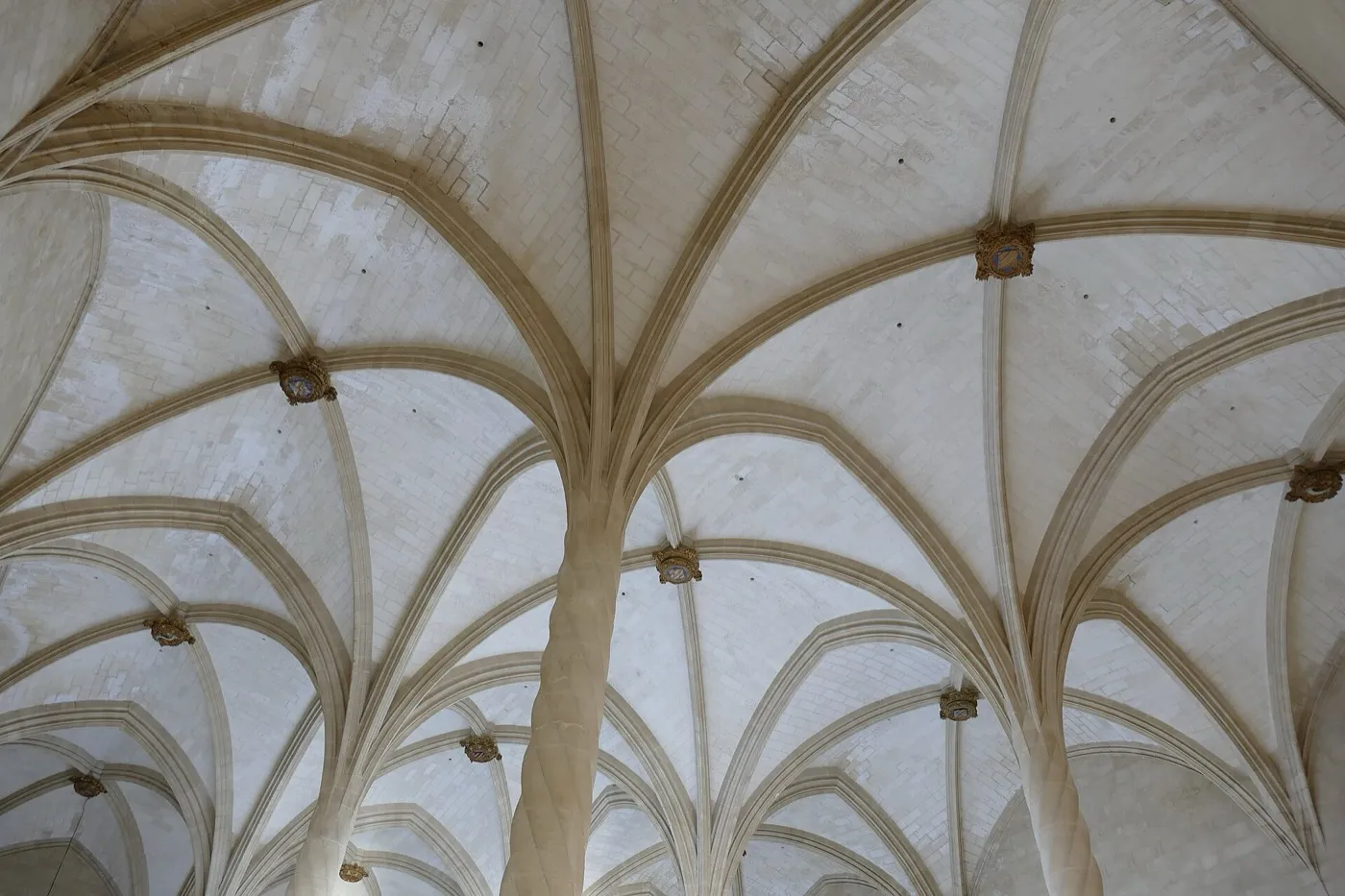
Inside, look out for the twisted columns. Six of them carry the whole vault.
The craft market on Passeig de Sagrera doesn’t start until 19:00 and only runs from May to September.
Don’t plan Es Baluard for a Monday, the museum is closed then.
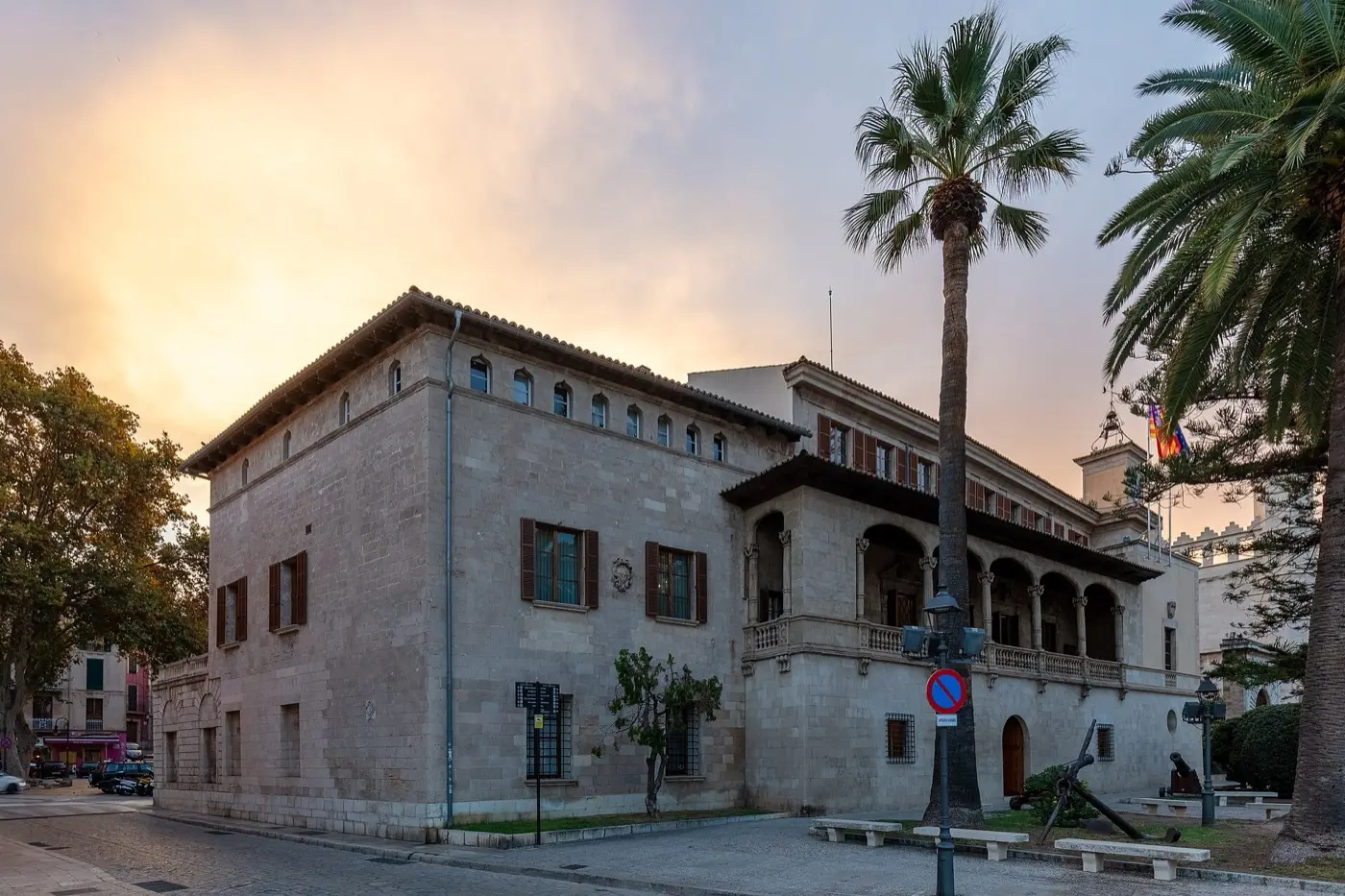
The Consolat de Mar is the seat of the Balearic government. It’s best seen from outside, with its loggia facing the sea.
From shoreline to exchange
According to the official city chronicler, after 1229 this was the Ribera de Mar, a strip of shoreline in front of the Islamic city wall. Around 1300 it was enclosed with a new wall down to the sea. In the night leading into 14 October 1403, a flood of the Riera destroyed large parts of the neighbourhood. Rebuilding began afterwards.
During this period, in 1409, the merchants received the right from the King to found a college and build an exchange. The result was Sa Llotja, a building by the master builder Guillem Sagrera, who was also working on the cathedral at the time.
Source: Ajuntament de Palma: Cròniques de Palma, Bartomeu Bestard, Cronista oficial (2011), chapter Santa Catalina and es Jonquet, checked on 3 October 2026
Sa Llotja
According to the chronicle, construction began in 1421. Inside, the Llotja is a single large hall with three naves, carried by six twisted pillars beneath a rib vault. Above the main portal, the merchants’ guardian angel keeps watch. Sagrera left Mallorca before the work was finished, as the King called him to Naples.
Today the Llotja belongs to the Balearic government. According to the Ajuntament, the inside is only open when an exhibition is on.
Source: Ajuntament de Palma: Cròniques de Palma, Bartomeu Bestard, Cronista oficial (2011), chapter Santa Catalina and es Jonquet, checked on 3 October 2026 · Ajuntament de Palma, Palma Virtual: La Llotja, checked on 3 October 2026
Consolat de Mar
Right next to the Llotja on Passeig de Sagrera stands the Consolat de Mar, today the seat of the Presidency of the Balearic government. The name is a little misleading: according to the chronicle, the old maritime court sat in the Llotja until the 18th century. The 17th century building served as a warehouse for a long time. Only the Reial Consolat de Mar i Terra, founded in 1800, moved in here.
Between the Consolat and the Llotja stands the Porta del Moll from 1620, a gate in the old city wall. The wall facing the sea was demolished in 1873.
Source: Ajuntament de Palma: Cròniques de Palma, Bartomeu Bestard, Cronista oficial (2011), chapter Santa Catalina and es Jonquet, checked on 3 October 2026
Market, museum and buses
From May to September, craftspeople and artists on Passeig de Sagrera show ceramics, painting, photography, jewellery, leather bags and woodwork. On the edge of the neighbourhood towards Santa Catalina lies Es Baluard. The museum is housed in the Renaissance bastion of Sant Pere.
The bus details come from the scheduled timetables of EMT Palma (retrieved 1 October 2026), not real time.
- Passeig de Sagrera: May to September, Thu to Sun, 19:00 to 0:30.
- Es Baluard: Tue to Sat 10:00 to 20:00, Sun 10:00 to 15:00, closed Mon, closed on 1 January and 25 December. On Fridays, according to the museum, you pay what you like.
- pl. de la Reina, Catedral: lines 25, 35 and CC. Parc de la Mar, Catedral: lines 25 and 30.
- From the airport: line A1 to passeig Mallorca, Jaume III (about 25 min), then on foot.
Source: Ajuntament de Palma: Mercado artesanal del Passeig de Sagrera, checked on 3 October 2026 · Es Baluard Museu d’Art Contemporani de Palma (operator): visiting and opening hours, checked on 3 October 2026 · EMT Palma: lines and timetables (Open Data), checked on 3 October 2026
QUICK ANSWERS
Frequently asked questions
Can you visit the inside of the Llotja in Palma?
Only during an exhibition. According to the Ajuntament, the inside of the Llotja is only open when an exhibition is on.
Who built the Llotja?
The master builder Guillem Sagrera, for the merchants’ college. According to the city chronicler’s chronicle, construction began in 1421.
When is the market on Passeig de Sagrera?
From May to September, Thursday to Sunday from 19:00 to 0:30, with crafts and work by artists.
When is Es Baluard open?
Tuesday to Saturday from 10:00 to 20:00 and Sunday from 10:00 to 15:00. The museum is closed on Mondays, on 1 January and on 25 December.
What is the Consolat de Mar?
A 17th century building next to the Llotja, today the seat of the Presidency of the Balearic government. It takes its name from the Reial Consolat de Mar i Terra, which was based here from 1800.
HOW TO READ THIS
Sources, not hearsay.
Every detail on this page comes from one of these sources. Timetables, opening hours and market rules can change. The body concerned always has the final word.
- Ajuntament de Palma: Cròniques de Palma, Bartomeu Bestard, Cronista oficial (2011), chapter Santa Catalina and es Jonquet www.palma.es · checked on 3 October 2026
- Ajuntament de Palma, Palma Virtual: La Llotja palmavirtual.palma.es · checked on 3 October 2026
- Ajuntament de Palma: Mercado artesanal del Passeig de Sagrera www.palma.es · checked on 3 October 2026
- Es Baluard Museu d’Art Contemporani de Palma (operator): visiting and opening hours www.esbaluard.org · checked on 3 October 2026
- EMT Palma: lines and timetables (Open Data) www.emtpalma.cat · checked on 3 October 2026
Tips or corrections: [email protected]
Image credits
Real photos from Wikimedia Commons under free licences, resized for this page and saved as WebP.
- Sa Llotja (photo 2022): Diego Delso, CC BY-SA 4.0
- Vault and twisted columns inside the Llotja (photo 2024): Kritzolina, CC BY-SA 4.0
- Consolat de Mar on the Passeig de Sagrera (photo 2022): Diego Delso, CC BY-SA 4.0